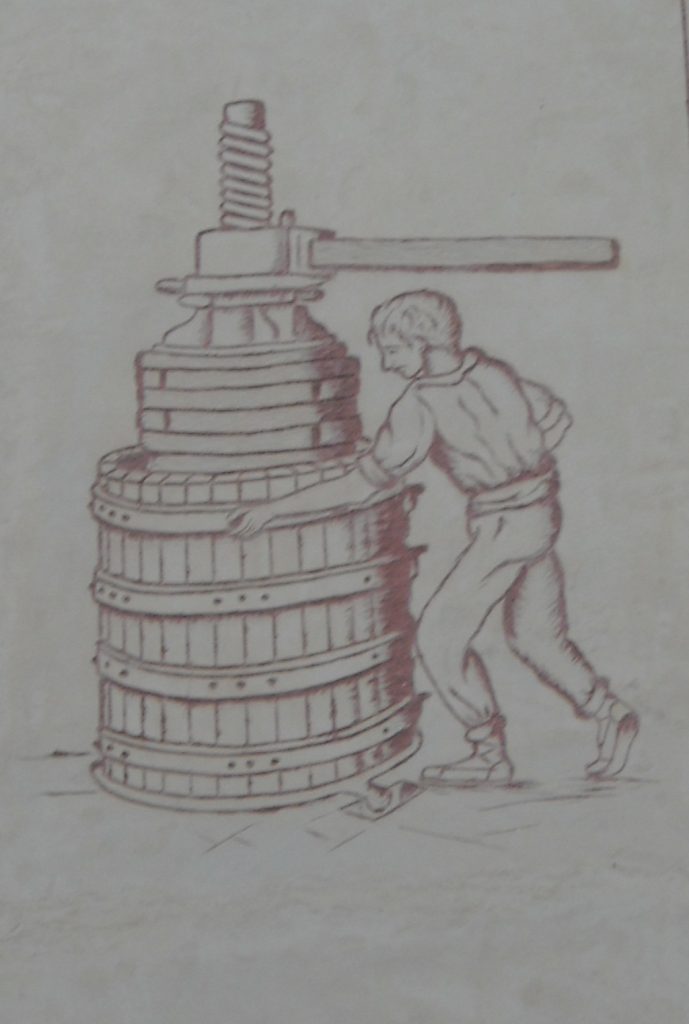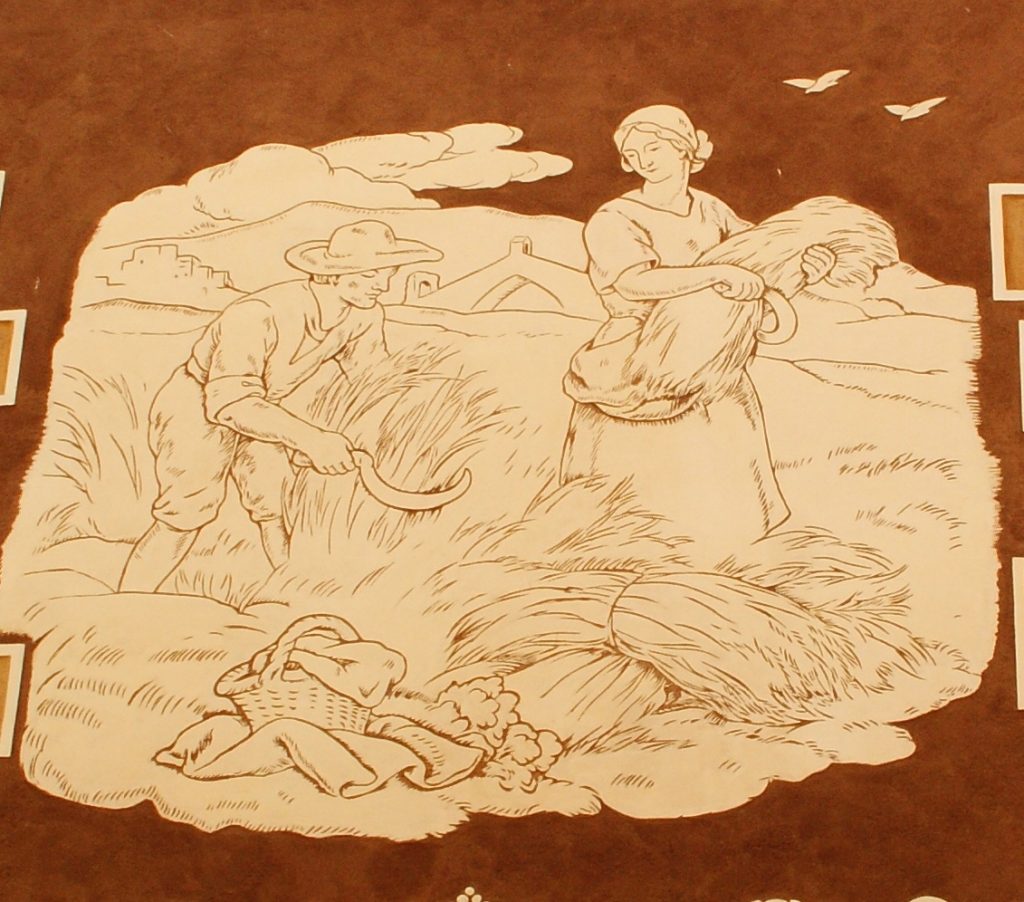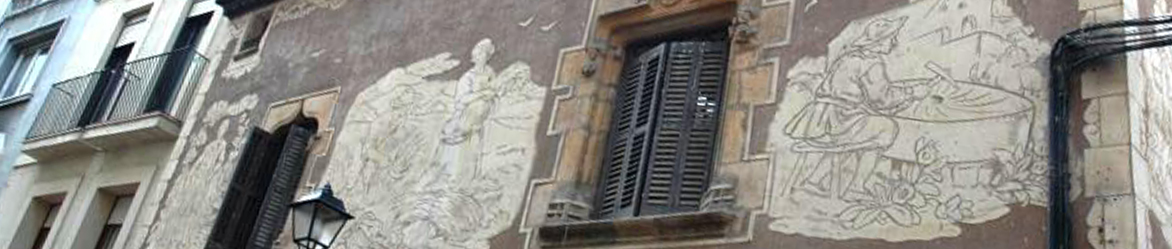
Martorell preserves a rich set of buildings decorated using the sgraffito technique, a unique heritage that can be explored through the town’s sgraffito itinerary. The oldest dates from 1821 and is located at Plaça de la Vila, 35. It stands out for its white-on-grey tones, unlike the ochre and reddish hues of the others.
Most of the preserved sgraffito decorations date from the 20th century, especially from the post-war period, and this decorative technique is still alive today. For this reason, it is easy to find new buildings that continue to incorporate sgraffito on their façades. Although the largest concentration is located in the historic centre, more can be found along Montserrat Street and in other parts of the city.
This artistic technique has two major exponents in Martorell:
Ferran Serra and Jaume Amat. It is common to find their names and the year of execution on the façades they decorated.
Ferran Serra (Barcelona, 1905 – 1988)
He worked in Martorell during the Spanish Civil War. Among his most notable sgraffito works are:
• Casa de la Vila (1937)
• Edifici de la Caixa, plaça Portal de l’Anoia (1950)
• Farmàcia Bujons (1954)
• C. Pere Puig, 78 (1942–1945)
• Plaça de la Creu, 6 (1954)
Jaume Amat (Martorell, 1924 – 2003)
Multidisciplinary artist, also a promoter of the Martorell Studies Centre. He trained and collaborated on some works with Ferran Serra, such as Casa Mestres. Restoring and creating sgraffitos was one of his great passions. Among his works are:
• La Rectoria
• C. Pau Parés, 5 (1994)
• C. de la Rutlla, 30 (1990)
• Chapel of Sant Joan (1992)
With the Martorell sgraffito itinerary, visitors can enjoy a cultural route that showcases part of the town’s artistic identity and its most unique architectural heritage.