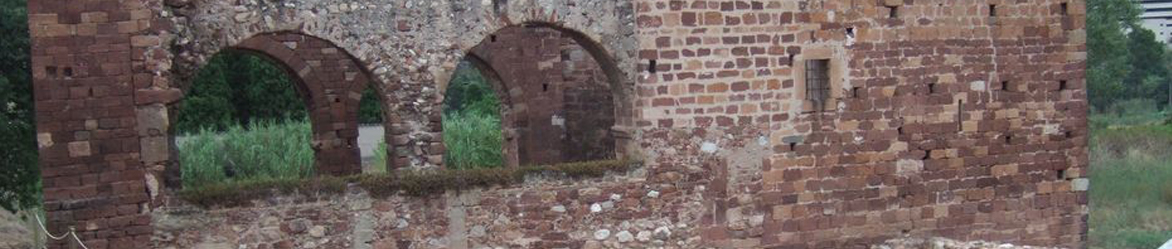
Located in the Anoia plain, we find the archaeological sites of Santa Margarida, organized around a late 12th-century Romanesque church and a 16th-century farmhouse. The land it occupies, together with that of the former monastery of Sant Genís de Rocafort, was ceded to the municipality by its owner, Pau Sendrós, in 1967, with the aim of dedicating the site to archaeological research. This research began in 1972 under the guidance of the Martorell Studies Centre. Since 1981, the research project has been integrated into the research program of the Department of Prehistory, Ancient History, and Archaeology at the University of Barcelona.
The archaeological sites of Santa Margarida present an extensive and continuous historical sequence, still under study, spanning from the 5th century to the present day. The elements that make up the site are: a Romanesque church from the late 12th century, built over the remains of a 5th-century paleochristian church; a necropolis with remains from the 5th to the 18th century; a set of silos located inside and outside the church, built in the first half of the 11th century; a set of structures associated with the church, serving funerary, religious, or habitation purposes; and a 17th-century farmhouse, built over a 16th-century structure with traces from the 14th century.
Inside the farmhouse, visitors can see the monographic exhibition of the site.